
Introduction
Smita Sabharwal is one of India’s most recognized civil servants, admired for her administrative leadership, citizen-centric governance, and contribution to public service. Belonging to the 2001 batch of the Indian Administrative Service (IAS) and the Telangana cadre, she earned the title “People’s Officer” because of her direct engagement with citizens and her innovative governance initiatives.
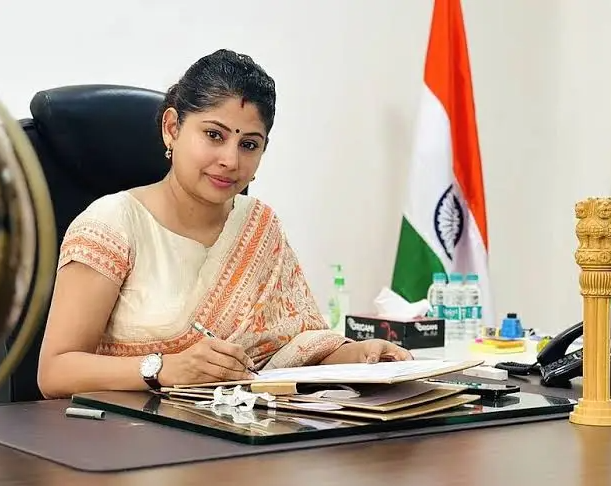
Over the years, Smita Sabharwal has served in several important administrative positions and has become an inspiration for UPSC aspirants across the country.
Early Life and Education
Smita Sabharwal was born on 19 June 1977 in Darjeeling, West Bengal, into a Bengali family. Her father, Colonel Pranab Das, served in the Indian Army, while her mother Purabi Das played an important role in supporting her academic journey.
She completed her schooling at St. Ann’s High School, Secunderabad, where she emerged as an All India topper in the ICSE examination. She later graduated in Commerce from St. Francis College for Women, Hyderabad.
At the age of just 24, she cleared the UPSC Civil Services Examination in 2001 with an impressive All India Rank 4, marking the beginning of an extraordinary administrative career.
Beginning of Her IAS Journey
After completing her training at the Lal Bahadur Shastri National Academy of Administration (LBSNAA), Mussoorie, she underwent district training in Adilabad.
Her first independent posting came as Sub-Collector of Madanapalle in Chittoor district, where she gained valuable experience in district administration and land revenue management. She later worked in rural development as Project Director of DRDA in Kadapa.
Her dedication, discipline, and innovative approach quickly earned recognition within administrative circles.
Transformation of Urban Administration
As Municipal Commissioner of Warangal, Smita Sabharwal introduced the “Fund Your City” initiative under the Public-Private Partnership (PPP) model. Through this initiative, several urban infrastructure projects such as traffic junctions, bus stops, parks, and foot-overbridges were developed.
Her urban governance model demonstrated how public participation and efficient administration can improve city infrastructure without excessive burden on government resources.
District Collector and Public Service Initiatives
Smita Sabharwal gained nationwide recognition during her tenure as District Collector of Karimnagar in 2011.
One of her most impactful initiatives was the “Ammalalana” programme, aimed at improving maternal healthcare and institutional deliveries in government hospitals. The programme became a model initiative in public health and received appreciation at the national level.
Under her leadership:
- Roads and public infrastructure were modernized
- Public healthcare systems improved significantly
- Government schools adopted technology-based monitoring
- Voter awareness campaigns increased polling participation
Karimnagar district received recognition as one of the best-performing districts under the Prime Minister’s 20-Point Programme during her tenure.
She also served as District Collector of Medak and successfully conducted free and fair elections with high voter participation.
Technology-Driven Governance
Smita Sabharwal is widely known for using technology in governance. She introduced innovative monitoring systems for:
- Government schools
- Public health centres
- Administrative performance tracking
Through digital governance and accountability systems, she improved service delivery and transparency in administration.
Her work reflects the growing importance of technology in modern public administration.
Role in Telangana Government
Smita Sabharwal became the first woman IAS officer appointed to the Chief Minister’s Office in Telangana. Over the years, she has handled several important administrative responsibilities in the state government.
She has also served as:
- Member Secretary of Telangana State Finance Commission
- Secretary for Youth Advancement, Tourism & Culture
Her leadership continues to influence governance and public policy in Telangana.
Awards and Recognition
Throughout her career, Smita Sabharwal has received several prestigious awards for excellence in governance and innovation.
Some notable recognitions include:
- Indian Express Devi Award (2015)
- e-India Award for Digital Health Initiatives
- Chief Minister’s Award for Best District Administration
- Recognition for e-Governance initiatives
- Nomination for Prime Minister’s Award for Excellence in Public Administration
These achievements reflect her dedication toward efficient governance and citizen welfare.
Inspiration for UPSC Aspirants
Smita Sabharwal’s journey from a young UPSC aspirant to one of India’s most respected IAS officers continues to inspire thousands of students preparing for civil services examinations.
Her story highlights:
- Hard work and discipline
- Public-oriented administration
- Innovation in governance
- Leadership with accountability
For many aspirants, she represents the modern face of Indian bureaucracy — efficient, accessible, and citizen-focused.
Conclusion
Smita Sabharwal stands as a powerful example of dedicated public service and progressive administration in India. Her contributions to governance, healthcare, education, and digital administration have left a lasting impact on public administration in Telangana and beyond.
Her journey reminds aspiring civil servants that administration is not just about authority, but about service, responsibility, and meaningful change in society.